Battery Connectors
Datum offers a wide range of standard and custom battery connectors, battery crimps and battery tags in Stainless-steel, Nickel plated steel, Nickel plated Copper and pure Nickel strips to suit your requirements and application.
Custom battery connectors for batteries can be made to order and cut on our precision laser line and specialized slitting and cutting equipment from coil or sheet. Datum manufacture custom battery connectors, nickel solder tabs and custom earth rings to your specifications. We also offer a comprehensive crimping service via a trusted third party with the capability to crimp to any pre-crimped or preassembled wire.
Get in touch with our team on:
+44 (0) 1548 855 900 (UK & Europe)
+1 607 239 6274 (US)
+65 3157 0394 (Singapore)

Battery Connectors
Product Inquiry
Login
Please enter your name and email address to login.

Please contact us if you do not have an account
Customer Name
Order History
| Product | Unit Price | Quantity | Total |
|---|
Back to Order List
Customer Name
Order Details
| null | $0.00 |
|---|---|
| Quantity: 0 |
Total
| Taxes | $0.00 |
|---|---|
| Total | $0.00 |
Repeat Order
You can change the quantity and address on next page.
Repeat Order
Confirm Order
Please enter your name, email and confirm your shipping address to complete your order of:


 Details
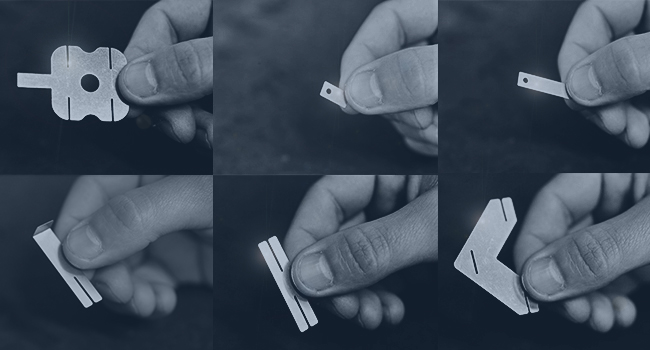
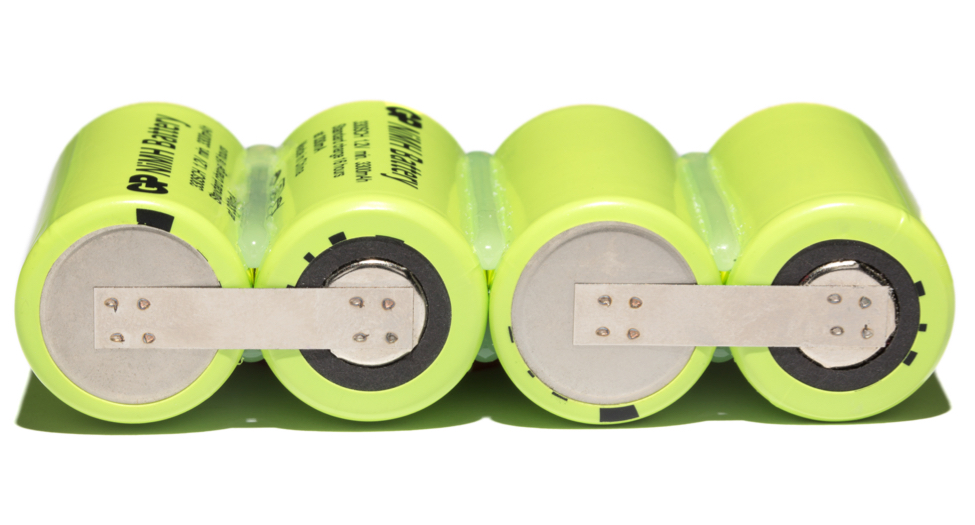
We use Nickel 200/201 grade, which conforms to the ASTM B162 standard. It’s commercially pure (99.6% and higher) with good mechanical properties, and is resistant to a range of corrosive media. Our nickel strip and tags make excellent battery connectors because they have a low electrical resistance. Most of the material we provide will be used as battery connectors, to link cells together either as a single tag from cell to cell or as a special etched or stamped tag, which can link multiple cells. The tags can be used as electronic parts, and in resistance to corrosion applications, like handling alkaline solutions and foods.
Nickel battery connectors, Nickel plated battery connectors and Nickel strip for battery connection are best suited as links for battery packs making it is easy to solder, spot or tag weld.
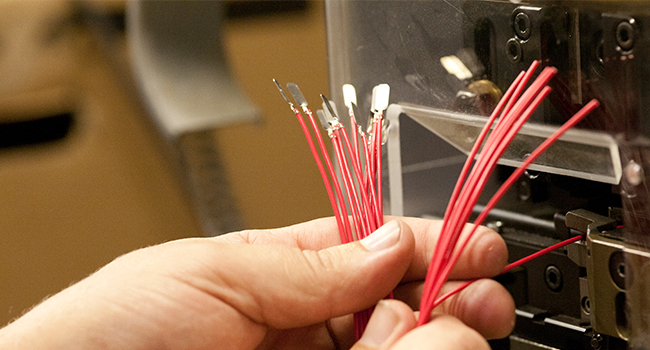
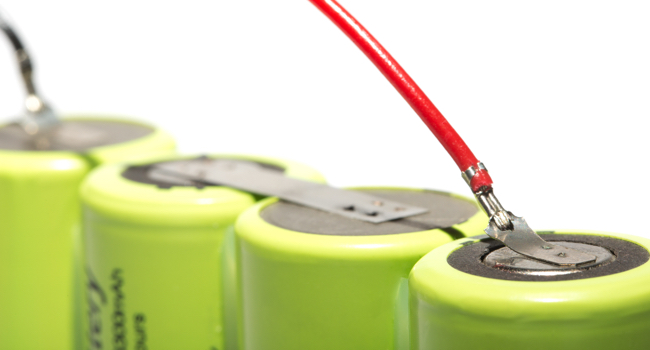
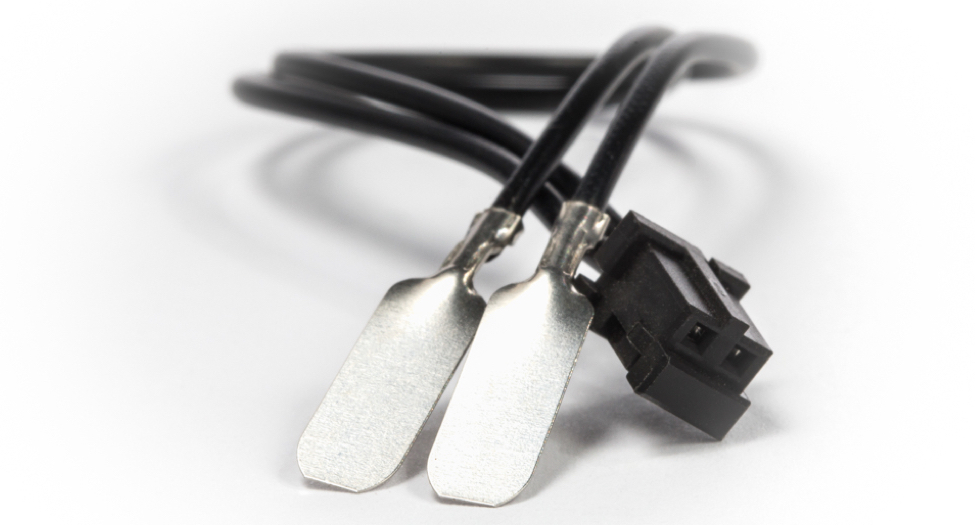
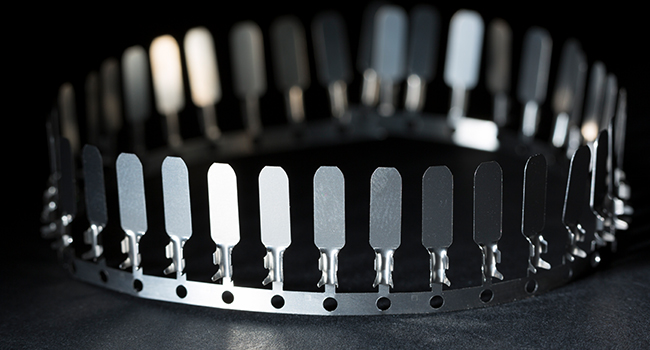
Datum battery crimps replace slow, expensive soldering processes in battery pack manufacturing. By working with our customers and understanding their processes, we supply our crimps to remove bottlenecks from critical areas of your production lines.
Available wire sizes: 20-26 AWG, Standard 7/0.2mm, others available upon request.
Crimp dimensions: 11mm spade and 16mm in length
Material: Nickel plated stainless steel
Crimps are available in reels of 10,000 pieces per reel.
BATTERY CRIMPS - TYPICAL CHEMICAL COMPOSITION (%)
Fe |
C |
Si |
Mn |
P |
S |
|---|---|---|---|---|---|
| 99.6 | 0.05 | 0.02 | 0.18 | 0.012 | 0.02 |
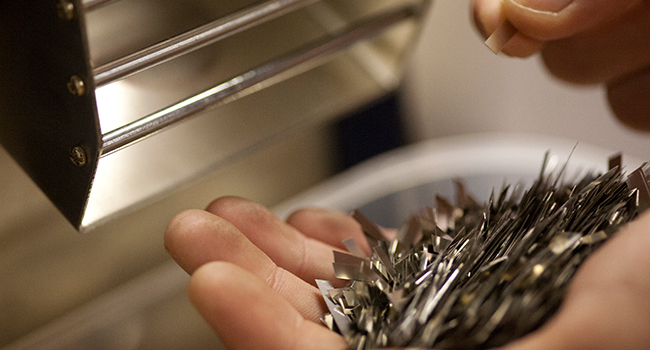
Datum battery tags are available in nickel-plated steel and commercially pure nickel. All tags are produced at our facility, cut to order with our specialized slitting and cutting equipment. This enables us to deliver high-quality standard and custom-size tags at competitive prices with short lead times.
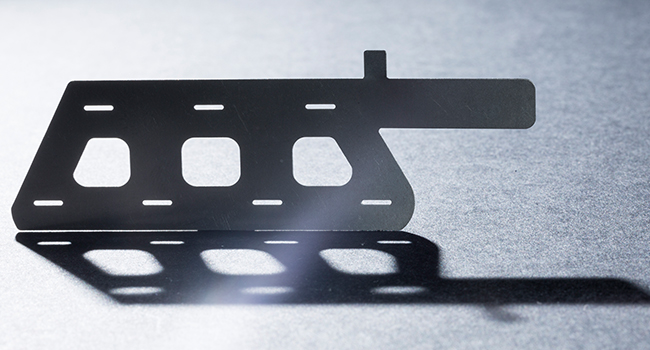
Custom tags are becoming increasingly popular as miniaturization and power electronics drive specialized shapes, formats and load requirements. We can specialty etch or stamp custom shaped tags to ensure high-yielding and repeatable production processes.
NICKEL STRIPS & TAGS - TYPICAL CHEMICAL COMPOSITION (%)
|
|
Nickel 200/201 |
|---|---|
| Ni | 99.5 |
| Cu | 0.001 |
| Fe | 0.07 |
| Mn | 0.25 |
| C | 0.01 |
| Si | 0.14 |
| S | 0.001 |
| Mg | 0.02 |
| Ti | 0.002 |
TYPICAL MECHANICAL PROPERTIES
|
|
Nickel 200/201 |
|---|---|
| Tensile Strength N/mm2 | Max 130 |
| Electrical Resistivity Ω/m | Min 50 |
| Electrical Resistivity Ω/m | 9.0 x 10⁻⁸ |
PURE NICKEL SPECIFICATIONS
Typical chemical composition (%) Nickel 200/201: Ni 99.5 + trace elements
Typical Electrical Resistivity: 9.0 x 10⁻⁸ Ω/m
Hardness: 90-120HV
Thicknesses available: 0.127 mm (stock), 0.1 to 0.3mm; all meet industry standard tolerance of 0.01 mm
NICKEL PLATED STEEL SPECIFICATIONS
Typical composition (%): Fe 99.6 + trace elements
Typical Ni plating thickness: 2 µm, both sides
Typical Hardness: 80-110HV
Thicknesses available: 0.127 mm (stock), 0.1 to 0.3mm; all meet industry standard tolerance of 0.01 mm
SIZES AVAILABLE
Coils: 3, 3.2, 4, 4.8, 5, 6, 6.35 mm wide
Tags cut to length on request
Stock is 0.127 mm thick; others available upon request
We test all incoming material to assure it meets Datum quality standards before it is stocked, and use specialized equipment to assure repeatable, high-quality output from our wholly owned, ISO 9001:2015 certified production facilities.
Resources
Visit Datum’s Support Library for a complete list of resources.
VIEW ALL RESOURCES
Nickel Strips & Tags Datasheet
View Details
Nickel Plated Steel Datasheet
View Details
Battery Crimps Datasheet
View Details